

USask ohpahotân | oohpaahotaan committee advancing Indigenous education and reconciliation
The University of Saskatchewan (USask) College of Education ohpahotân | oohpaahotaan committee is working to ensure education meets the needs of future generations by advancing the university’s Indigenous strategy.
By Connor JayFormed in November 2022 and chaired by assistant professor Dr. Gordon Martell (PhD), the committee is tasked with implementing USask’s ohpahotân | oohpaahotaan Indigenous strategy. Its mission is to enhance academic, research and support services for Indigenous students, faculty and staff, while fostering reconciliation and decolonization.
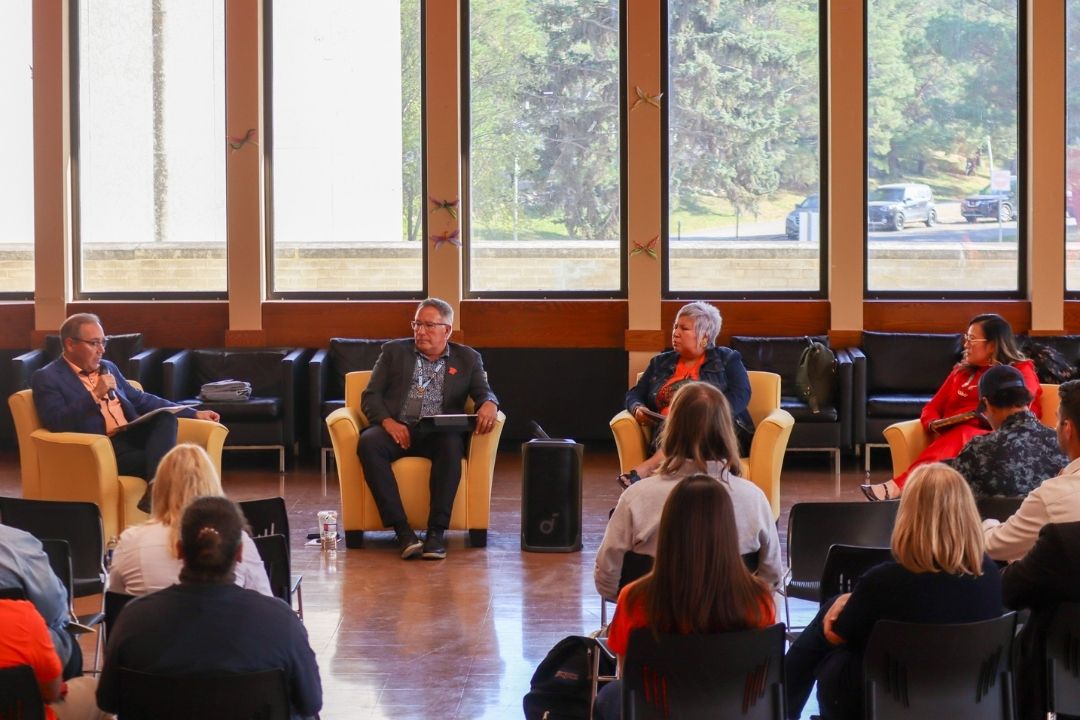
On September 29, the committee hosted a pipe ceremony and panel discussion on the role of teacher education in reconciliation. The event was inspired by the National Day for Truth and Reconciliation and aligned with Calls to Action 62 to 65 from the Truth and Reconciliation Commission (TRC), which emphasize the need for Indigenous content in education and teacher training.
The day began with a pipe ceremony led by Elder Roland Duquette, who offered prayers and teachings to bless the school year. The ceremony, rooted in cultural practice and community connection, set the tone for a day of reflection and dialogue.
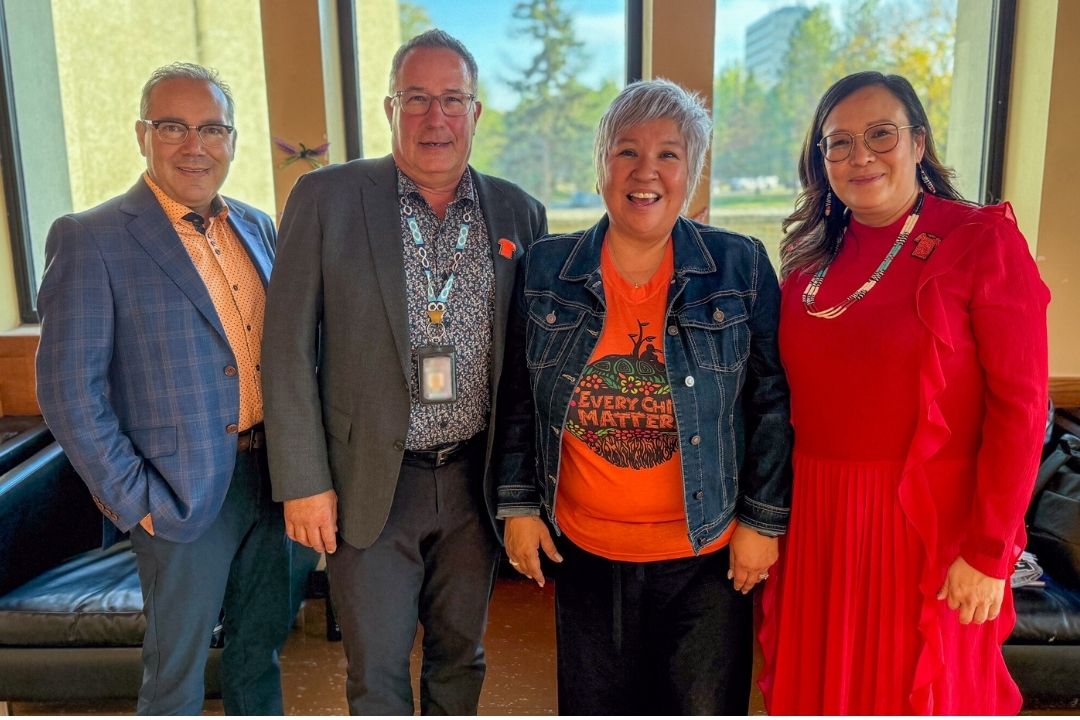
In the afternoon, Elmer Tootoosis performed an honour song to ground the audience and panelists. Dean Julia Paulson welcomed attendees, followed by a panel moderated by Dr. Martell. The panel featured:
- Darryl Bazylak (BEd'93, BA'97, MEd'02), Deputy Chief of Programs and Services of Métis Nation–Saskatchewan with roots in Duck Lake, Fish Creek and the Red River Settlement
- Deloris Netmaker (BEd'95), a member of Big River First Nation and Executive Director of Education for the Federation of Sovereign Indigenous Nations
- Marnie Ross (BEd'05, MEd'24, current EdD student), a member of Red Earth Cree Nation and Superintendent of Education with Saskatoon Public Schools
Martell opened the discussion by asking what changes schools in Canada have made to include Indigenous content and perspectives in their teaching since the publication of the TRC report in 2015.
Bazylak, a veteran K–12 educational leader, framed his response around a continuum of social progress: from tolerance to acceptance, understanding, inclusion and finally genuine appreciation. He emphasized the importance of policy in driving change, noting that Indigenous representation on school boards and in leadership roles are essential.
“Policy is what drives us and keeps us on our pathway,” he said.
Netmaker echoed the importance of visibility and representation. She recalled returning to teach at Confederation Park School in 2011—renamed to wâhkôhtowin Community School in 2020—and witnessing a Métis fiddler perform for her Cree class.
“I remember thinking in my heart, ‘We’ve come a long way,’” she said. “I thought about how those children must have felt seeing an Indigenous person stand up there talking and playing.”
While she acknowledged progress, such as the development of Cree preschool programs and the awâsisak kâ-nîmîhtocik St. Francis Cree Bilingual School, Netmaker stressed the need for deeper curriculum reform.
“When I think about our social studies textbooks, with Columbus and the first European contact, Indigenous history needs to be in those textbooks too,” she said. “We need more change and implementation in K–12 schools.”
Ross focused on the importance of normalizing Indigenous worldviews in education. “Schools are spaces of learning,” she said. “When we think about what Indigenous students need to participate, they need to be healthy human beings and viewed through a holistic lens.”
She emphasized the value of evidence-based decision-making and understanding the diverse realities Indigenous students face. Ross also highlighted the role of USask’s Indian Teacher Education Program (ITEP) and the Saskatchewan Urban Native Teacher Education Program (SUNTEP) in developing Indigenous educators and leaders.
“When you're thinking about trying to help Indigenous students to be well and succeed in the world, we can’t accept surface-level work,” she said. “It’s looking deeper and understanding the reasons we practise cultural ceremony—to support the healthy development of Indigenous people.”
The panel discussion built on earlier committee efforts, including faculty and staff consultations, the development and actualization of a strategic direction in Indigenous education, and ensuring the college reflects Indigenous participation and influence in programming and Indigenous cultural spaces. The event drew more than 50 attendees, reflecting interest in Indigenous-led educational transformation.
Martell emphasized the importance of creating space for these conversations within teacher education and leadership development.
“Today is an opportunity to hear from some of the leaders in terms of empowering teachers in the field—in both First Nations and provincial schools,” he said. “Schools are unique contexts where we are part of the solution-building.”
The ohpahotân | oohpaahotaan Committee will continue its work to respond to the gift of USask’s Indigenous strategy, which was gifted to the University by Elders and knowledge keepers, supporting USask’s broader goals of reconciliation and decolonization.
“My hope is that when I walk into a non-Indigenous-focused school, I’ll see Indigenous people there,” said Netmaker. “And not just one or two Indigenous people. So that our voices are heard and that change can actually happen.”
Together, we will work towards Truth and Reconciliation. We invite you to join by supporting Indigenous achievement at USask.