

Dismantling systemic racism through USask anti-racism education courses
Professors, researchers, and alumni from the College of Education are teaching the language and layers of anti-racism and anti-oppression so educators can decolonize classrooms.
By Connor JayAnti-racism and anti-oppressive education uses specific approaches to eliminate racism and racial inequities with an understanding that racism is overt and systemic. As the University of Saskatchewan (USask) takes steps towards reconciliation and decolonization, education is a key component in shaping a future that allows all students to strive towards their full potential without external barriers.
USask Distinguished Professor Emerita Dr. Verna St. Denis (PhD) is a foundational anti-racism scholar whose life’s work was dedicated to changing systems through teaching. A member of Beardy’s and Okemasis Cree Nation and an Indian Teacher Education Program (ITEP) graduate (BEd’82), St. Denis was tasked to develop a mandatory undergraduate education course for teacher candidates focused on connecting racism with colonialism in Canada.
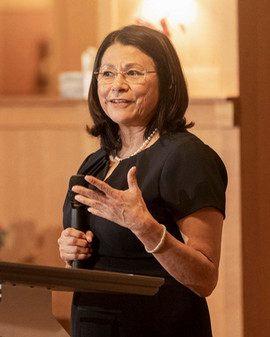
“I think the course was transformative, if I can say that,” St. Denis said in a 2023 interview. “I believe this college was the first in the country to ever have a required course in anti-racism and teacher education.”
St. Denis, who received the honourary lifetime recognition of distinguished professor in 2025 following her retirement in 2023, committed her scholarly career to providing language and supports to teachers, students, and educational stakeholders to change school systems.
Dr. Carmen Gillies (BEd’97, BA’02, MEd’07, PhD’18), an assistant professor in the Department of Educational Foundations (EFDT), is a critical race theory scholar who has taught EFDT undergraduate anti-racist courses since 2003. As faculty with the college since 2021, she now teaches and designs anti-racist graduate courses. Being Métis, Chinese, and Norwegian Canadian, Gillies grew up in Saskatoon with a heightened racial consciousness.
“I grew up experiencing normalized racism and watching my father, who was a teacher, experience overt racism, without understanding what was happening,” Gillies said.

She completed her BEd at USask but ultimately chose not to teach because of systemic racism. Wanting to learn about racism, she completed her Indigenous studies and MEd degrees, which led to her PhD in EFDT, supervised by Dr. Margaret Kovach (PhD).
“Unlike my experiences, most teacher candidates today know race is a social construct, but they often don’t know what that means or how to challenge racism,” she said.
Gillies continues to reference and learn from foundational anti-racist theory.
“There’s a common misunderstanding that anti-racism began during the pandemic through social media, but scholars and activists have theorized racism for generations,” she said.
Gillies highlighted the Anti-Racist Summer Institute she leads, as well as the Anti-Racist Education Mentorship Project. These programs relate directly to the current climate of K-12 classrooms.

“I want to provide educators with opportunities to build community,” she said. “The right to practice anti-racism in Canadian schools should not be taken for granted, and we have a responsibility to defend students’ rights.”
Dr. Ayodeji Osiname (PhD), assistant professor in the Department of Educational Administration (EADM), moved from Nigeria to Canada to pursue his graduate studies. After completing his PhD at the University of Manitoba, he joined USask in 2024 to add to the anti-racism scholarship.
“This work is so important,” Osiname said. “And, if you look at what’s happening within our communities and society, there’s a lot of polarization. I try to embed anti-racism education in my own teaching within the graduate programs.”
Khodi Dill (MEd’13) researched the deep roots of colonization and social analysis while studying under the supervision of St. Denis, Dr. Dianne Miller (PhD), Dr. Alex Wilson (EdD), and Dr. Marie Battiste (EdD). Dill also learned the necessity of community to combat oppression.
“The class I took from Alex covering LGBT themes was run like a community rather than a classroom,” Dill said. “Food, smudging, and relationships were incorporated without compromising the rigour of learning.”
As a spoken word poet, author, and teacher, Dill uses his words and language as his tools to carve his message into anti-racism spaces. His rhythm, flow, and inflections create relation for a topic that can be divisive.
“A teaching I learned from Dr. St. Denis is that Indigenous, Black and People of Colour aren’t voiceless, it’s just that White people aren’t listening,” he said.

Dill has progressed the space of anti-racism in ways that shake the status quo. His book stay up: racism, resistance, and reclaiming Black freedom, caught the attention of the United States Department of Defence and was banned for use in schools in 2025.
“I was shocked when I heard from my publisher,” he recalled. “But then I was validated because I was noticed by the U.S. Department of Defence. Catcher in the Rye, which is a top 100 book, is also on that list. So, I’m in good company.”
As Saskatchewan and Canadian classrooms continue to diversify, Osiname strives to best prepare pre-service teachers, educators, and administrators for the ever-changing student demographics.
“School systems have kids from different ethnic, linguistic, and cultural backgrounds,” he said. “Our teaching force is predominantly White, so how do we prepare teacher educators, principals, or administrators, for this work? I want kids to be represented in the teaching force, but also in the curriculum, administration, parent groups, and board members.”
Since Canadian education systems are built around a dominant Euro-centric curriculum, Osiname emphasizes the need for other perspectives to be present in classrooms.
"Education needs to include other ways of knowing, other ways of doing things, other ways of understanding the human condition,” he said. “Having kids see themselves in their learning with people like them will help students aspire, dream, and strive to achieve their potential.”