

From parks to a PhD, USask professor lives childhood dream
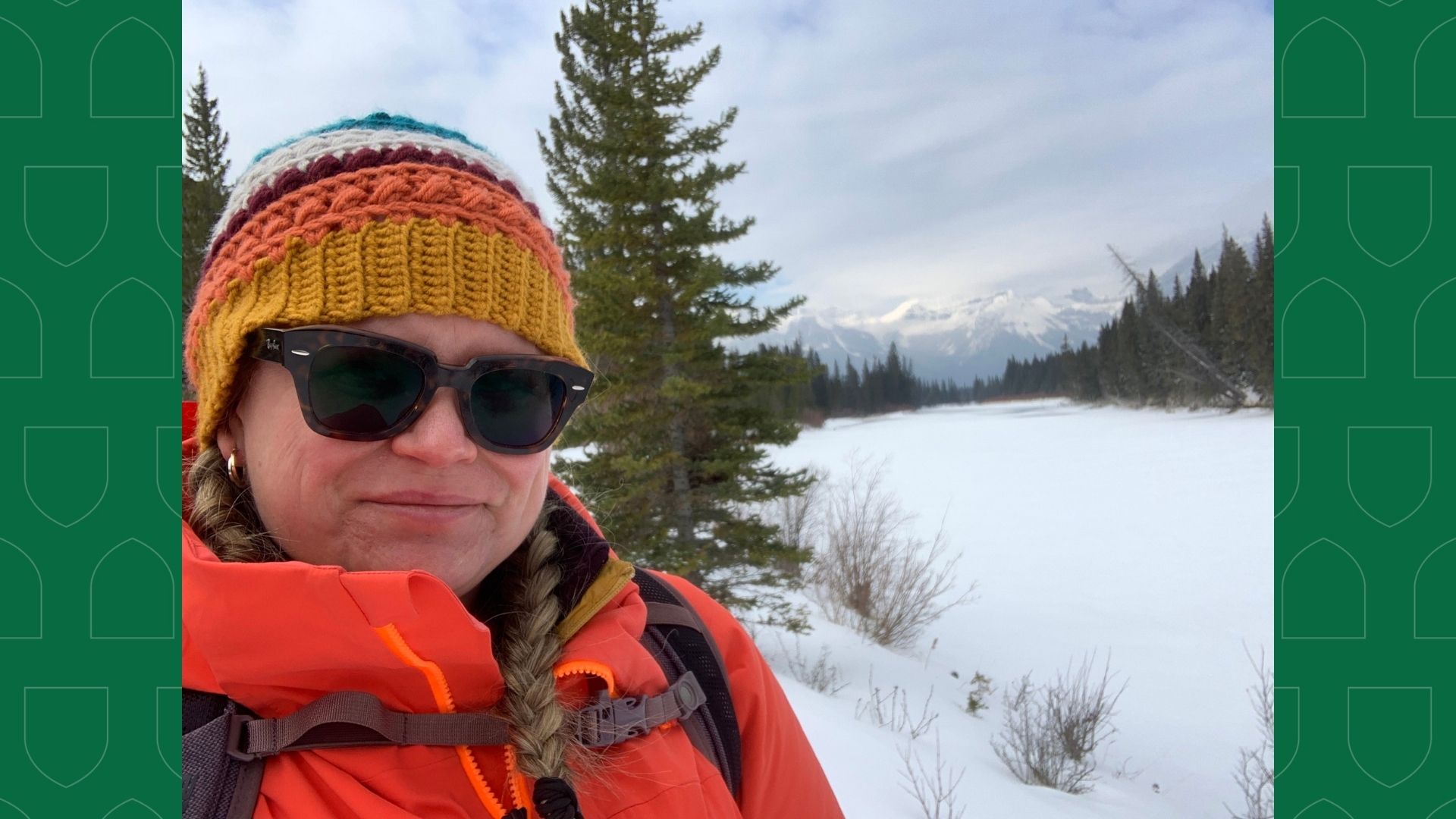
Growing up in Hinton, Alta., childhood trips to Jasper National Park helped shape Dr. Kim Edmondson’s (PhD) academic path that would eventually lead her to the University of Saskatchewan (USask).
By Connor Jay“Going on vacation to Jasper was part of my childhood memories,” said Edmondson. “I was born in January, and Jasper was a fun place to be in the winter.”
After earning Bachelor of Science and Bachelor of Education degrees from the University of Alberta (UAlberta), Edmondson returned to West Central Alberta to teach secondary school. Trained in social studies, she encouraged students to connect classroom learning to outdoor spaces.
“We often use national parks as a means to escape routine and reconnect with nature and the land,” she said.
Her interest in place-based education led Edmondson back to UAlberta to pursue a doctorate. Her PhD research examined social studies teachers’ relationships with national parks and how those relationships could inform decolonization and commitments to reconciliation.
As her academic work deepened, Edmondson also began to confront the difficult histories tied to the landscapes she loved. In particular, she focused on how the storying of national parks tend to erase stories that include the displacement of Indigenous Peoples.
“I attended a professional development session where we heard stories from descendants of families who were evicted from Jasper National Park as it was gaining national status,” she said. “Indigenous groups were essentially forced out. I had no idea this was part of the story of a place I had come to love.”
Edmondson’s work challenges the settler-colonial assumption that national parks are neutral or uncomplicated spaces. She encourages educators to question what is overlooked when parks are framed solely as sites of leisure or escape.
“When we enter a place like a park, even though we might think of it as nature, it’s not a neutral space,” she said. “These places produce us — whether we realize it or not. What I’m interested in is what gets taken away in that process and what gets reproduced in our teaching and curriculum.”
By helping teachers understand the contested nature of national parks on Indigenous homelands, Edmondson hopes they will move beyond nature-culture binary thinking to re-frame how they engage with and teach about actions like stewardship, conservation, recreation and reconciliation.
“One thing I stress with my students is that our teacher selves are complicated,” she said. “We can’t separate our personal lives from our professional ones. Taking a critical lens means examining not only the place itself, but our position within it.”
Although relocating from the mountains of Alberta to the flatlands of Saskatchewan might be an adjustment for some, Edmondson said the transition has been seamless. She has family ties in North Battleford and began her role as an assistant professor at USask in July 2025.
She has since taught both undergraduate and graduate curriculum studies courses while continuing her research.
“The opportunity [at USask] to work closely in both social studies education and curriculum theory was something I couldn’t pass up,” she said. “Curriculum theory reveals the complexities of the world and helps us understand whose knowledge is valued, both in documents and beyond them.”
Edmondson said she feels at home in Saskatoon, noting similarities to Edmonton and the city’s location in Treaty 6 territory. She credits the support she’s received from colleagues and the campus community.
While her ideal day would still involve hiking and backcountry camping in Jasper with her husband and dogs, Edmondson said her daily motivation comes from encouraging future educators to reflect critically and imagine a better society.
“Despite how challenging education can be, it continues to give me hope,” she said. “Teaching social studies is a hopeful endeavour. I can help teacher candidates empower their students to lead with compassion, imagination, and care for a better world.”