

USask teacher candidates showcase how science is for everyone
More than 100 students from St. Mark Community School got hands-on science lessons from third-year University of Saskatchewan (USask) College of Education teacher candidates during a recent school-wide science fair.
By Connor JayThe event brought university coursework directly into the classroom, with teacher candidates setting up interactive learning stations in the school gymnasium and leading lessons for students from kindergarten to Grade 8.
Dan Krause, a lecturer in curriculum studies at USask, said the fair format gives teacher candidates the opportunity to build real-world teaching experience while strengthening relationships with local schools.
“In my career, the students I was teaching taught me important lessons about teaching and learning science,” he said. “In my view, it is valuable to create opportunities for teacher candidates to begin learning from students, while getting into communities where they may later teach.”
Michelle Christopher, a trustee with Greater Saskatoon Catholic Schools, attended the science fair and said she immediately felt the energy in the building.
“There’s always a lot of excitement when students get to participate in different learning experiences like the College of Education’s science fair for elementary schools,” Christopher said. “It was wonderful to see how engaged the students were in the various displays and activities. The impact of hands-on learning cannot be understated.”
Christopher attended the event not only as a trustee, but also as the parent of teacher candidates in the College of Education.
“That experiential learning goes both ways,” she said. “It’s important for the elementary students, and it’s critical for future teachers to interact with the young students they will soon be teaching. They learn how to interact with children and hone their skills as educators.”
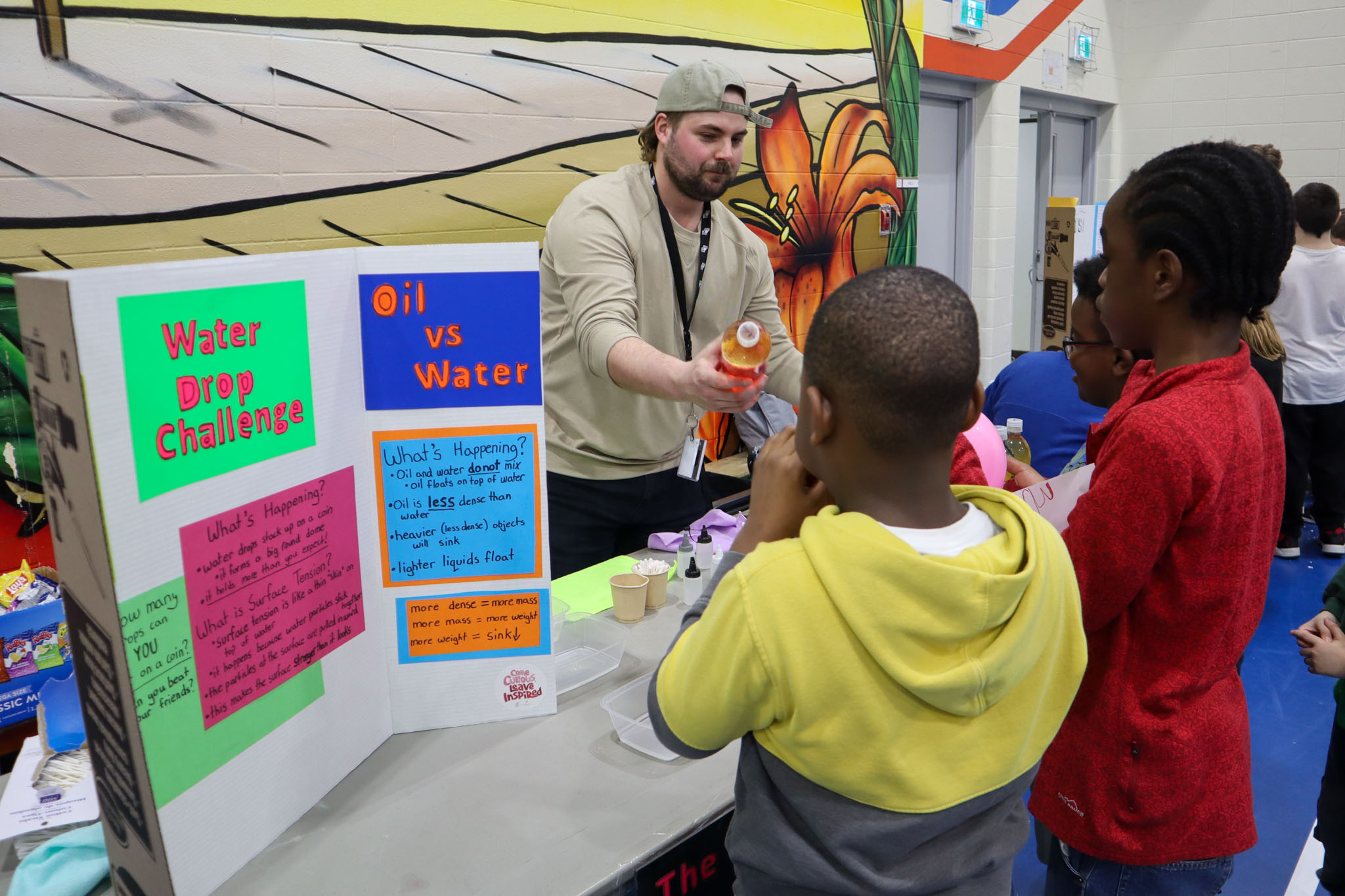
Teacher candidate Nick Neumiller ran one of the most popular stations, guiding students through activities such as testing how many drops of water could sit on a coin and experimenting with oil, pepper, and water. The activities introduced students to concepts like surface tension and fluid density.
“My science experiences have been very hands-on this semester,” Neumiller said. “I wanted to share what I learned in a way that was fun, welcoming, and safe.”
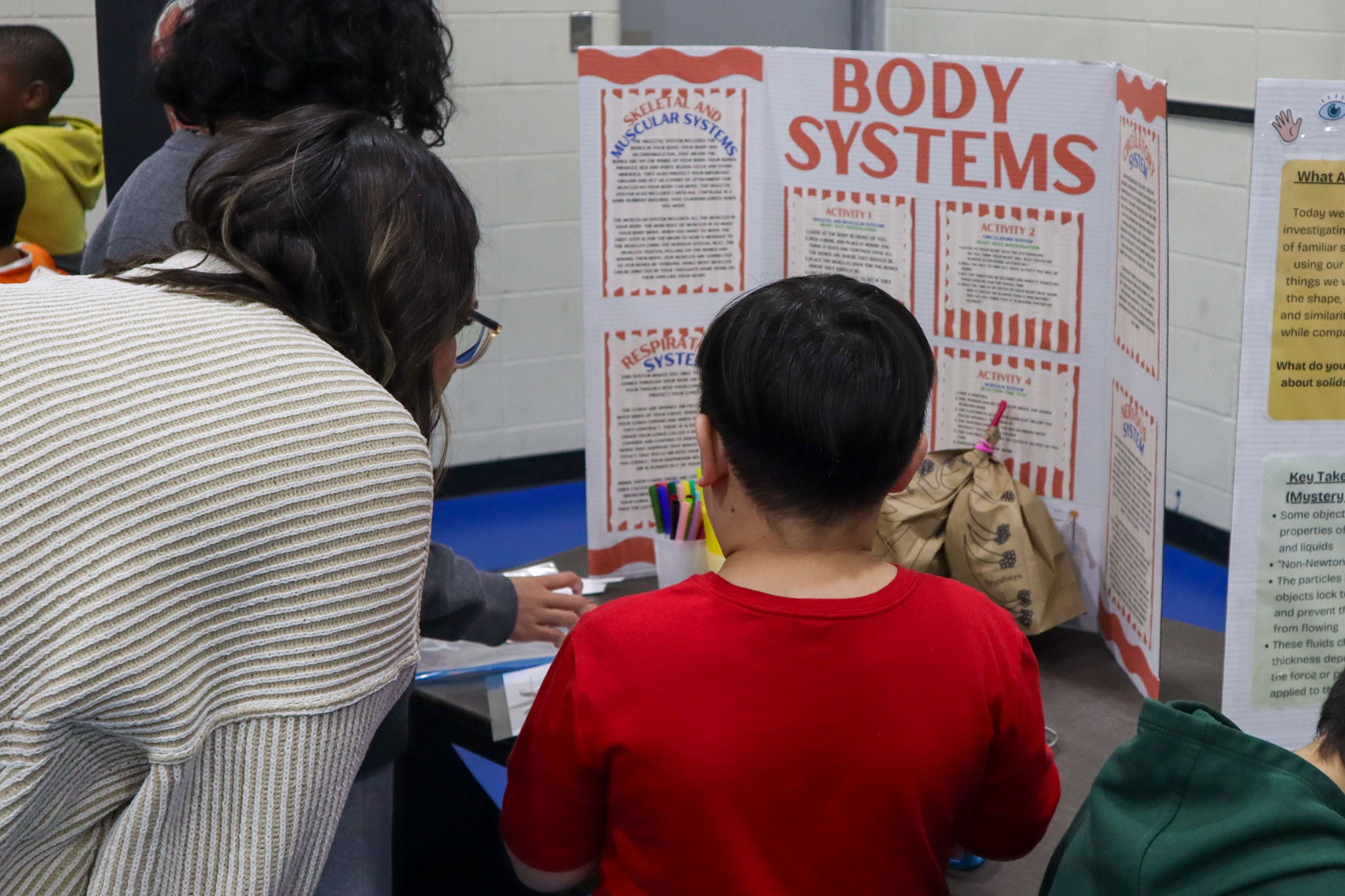
Nearby, Olivia Derksen used movement-based activities to instruct students about the human body and its systems. Students measured heart rates, matched bones and muscles, tested reaction times, and built models of lungs.
“I wanted to do something I would enjoy just as much as the kids would,” Derksen said.
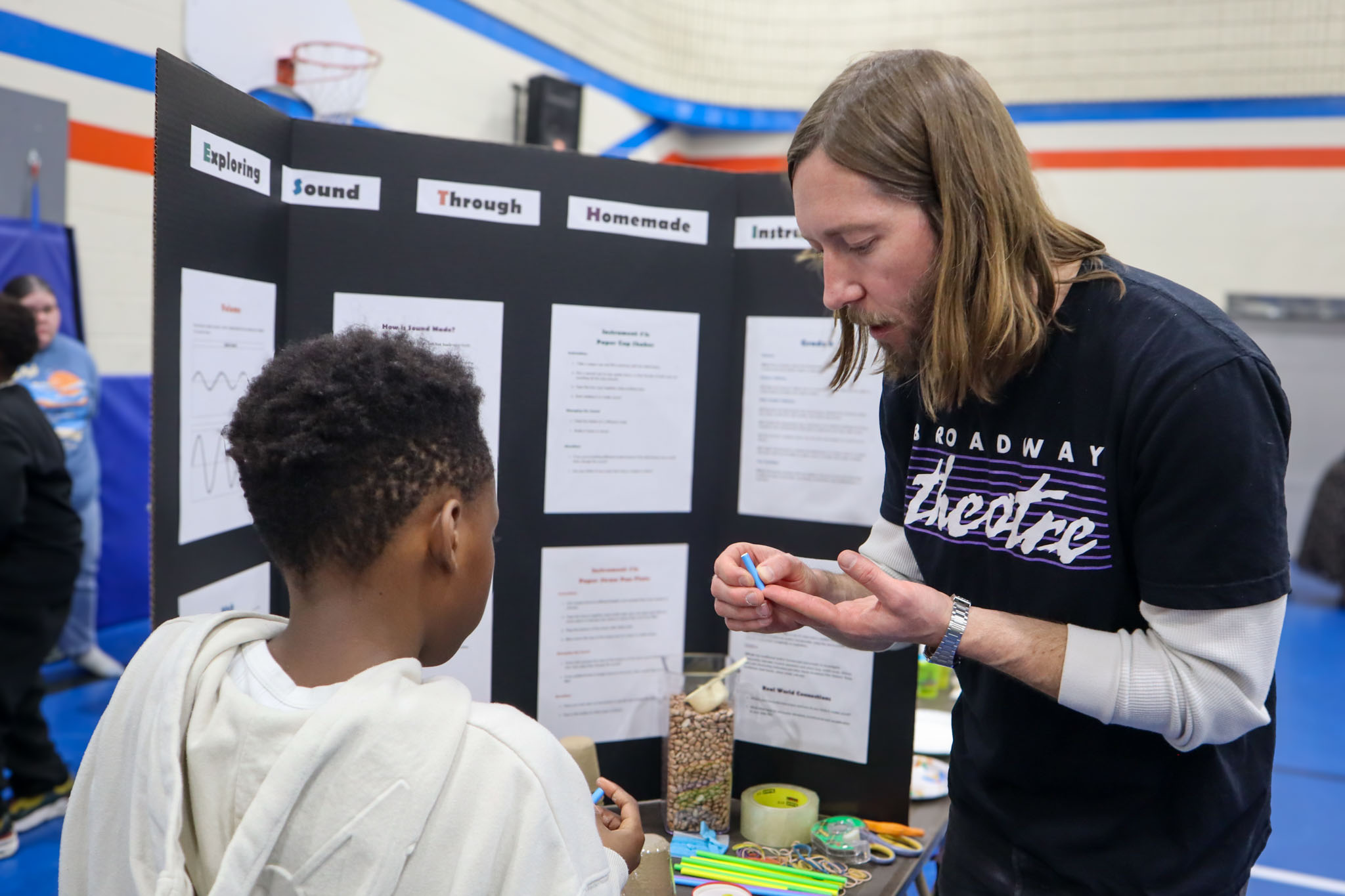
Sam Corbett blended science and the arts by teaching students about sound through music. His station allowed students to make simple instruments, including shakers, paper straw flutes, and elastic band guitars.
“I wanted the instruments to be simple enough to connect to sound, but still fun to make and take home,” Corbett said.
Classes cycled through the gymnasium throughout the afternoon, giving teacher candidates repeated opportunities to refine their presentations.
“It was fun and engaging,” Neumiller said. “I started quizzing students after the activities, but next time I’d think more carefully about how to check their learning ahead of time.”
Derksen said presenting to younger students helped build her confidence.
“I was nervous going in, wondering if my activities would work,” she said. “Once the students started coming through, I felt more confident. If I did it again, I’d try to cover a few more body systems.”
Corbett said he would focus more on visuals next time.
“I would have spent more time decorating my learning centre with images instead of too much text,” he said. “But overall, it went great.”
After the event was complete, Krause revealed part of the rationale for the approach.
“Opportunities to engage with elementary students in the community allow teacher candidates to both work on designing science activities and observe how students will perform the activities, which requires a different level of preparation than presenting to me or peers,” Krause said. “Plus, Saskatchewan’s science curriculum spirals, so students revisit science concepts multiple times as they progress through the grades.
“We have students from kindergarten through Grade 8 come through the stations, so the teacher candidates must work to communicate their scientific concept to students of different ages, which can help them work on this skill as they transition into certified teachers.”
Together we will support and inspire students to succeed. We invite you to join by supporting current and future students' needs at USask.