

Supporting Mental Wellness in Schools
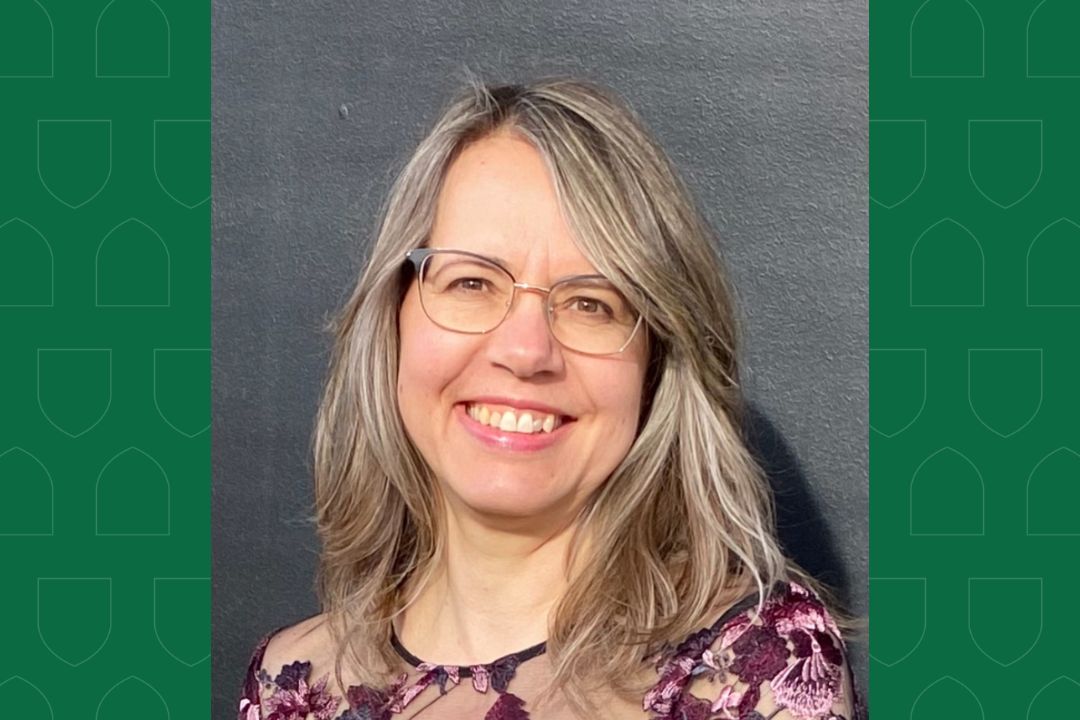
When Dr. Joanne Leitner (PhD) shares her expertise in the classroom, it comes from a strong foundation of lived experience.
By Julie BarnesShe has worked as both a classroom teacher and an educational psychologist for a number of years, and earned her PhD in educational psychology at the University of Regina before joining the University of Saskatchewan as an assistant professor in the Department of Educational Psychology and Special Education.
In her new role, Leitner brings a deep understanding of the challenges teachers face today, as well as the mental wellness supports that can help students succeed. “What they’ll be learning isn’t just theory,” she says. “it’s about how to apply strategies and research in real classrooms, in the context of what’s happening right now.”
She saw the new position as a great opportunity “to support classroom teachers in Saskatchewan and what they’re doing around student mental health and wellness.” The new position will also allow her to focus on her interest in the role of educational psychologists and interprofessional collaboration in schools.
Validate, Regulate, Collaborate
Leitner’s PhD research led to the development of the VRC model, which stands for Validate, Regulate, Collaborate.
“It’s a three-step model that teachers can use in emergent situations,” says Leitner. For example, when a student experiences an emotional outburst, teachers can respond by using the model.
First, teachers validate the student’s feelings and ensure they feel heard. Next, they help the student regulate their body and emotions with breathing or mindfulness exercises to help “get them in the right zone for learning.” Finally, at a later time, they collaborate with the student to problem solve and discuss what could be done differently to avoid future outbursts.
“It can be used in a variety of situations and environments,” she adds.
The model isn’t limited to classroom use. Students can teach it to their parents, and teachers can use it to guide tough conversations with families.
“It’s fast and easy to remember,” she says. “I think it empowers teachers without taking them into a role of a therapist.”
One of the big discoveries in Leitner’s research was that teachers themselves also need to be validated and to take time to regulate and collaborate.
“Students have a lot of emotions in the classroom and they can up-regulate a teacher,” she says. Often, teachers will need a moment to regulate before returning to teaching.
Leitner’s research also focused on teacher professional development and interprofessional collaborations.
Calling out for more support
“I think teachers are calling out for more professional development and support from school psychologists,” Leitner says. “As far as mental heath, they don’t necessarily have the background, so we want to make sure that teachers understand what they can do for students.”
Given the significant amount of time teachers spend with students, they’re in a unique position to notice concerns and connect students and their families with mental health professionals, she says.
“They play a really important role in that process, partly in gatekeeping for mental health, but also for promoting overall mental wellness.”
Empowering others’ voices
Just as the VRC model empowers teachers and students, Leitner focuses on empowering voices in her own classroom.
She often leaves discussions open-ended, giving students the opportunity to choose topics that interest them.
“Each person brings a unique knowledge about themselves, their own situation, and what they need to learn, so listening to students in the classroom—whether it be graduate or undergraduate students that we’re teaching…we need to ask more questions and listen more. I don’t think we do that enough.”
She also hopes her students take away the importance of problem solving. “A lot of my classes are training psychologists and I say that it’s always about what questions are you asking. Are you asking the right questions? That will often help lead you where you need to go next."